
Markets and Yachimun Street Within Walking Distance of Higashimachi, Naha: How Kart Drivers and Those Who Wait Can Spend Their Time
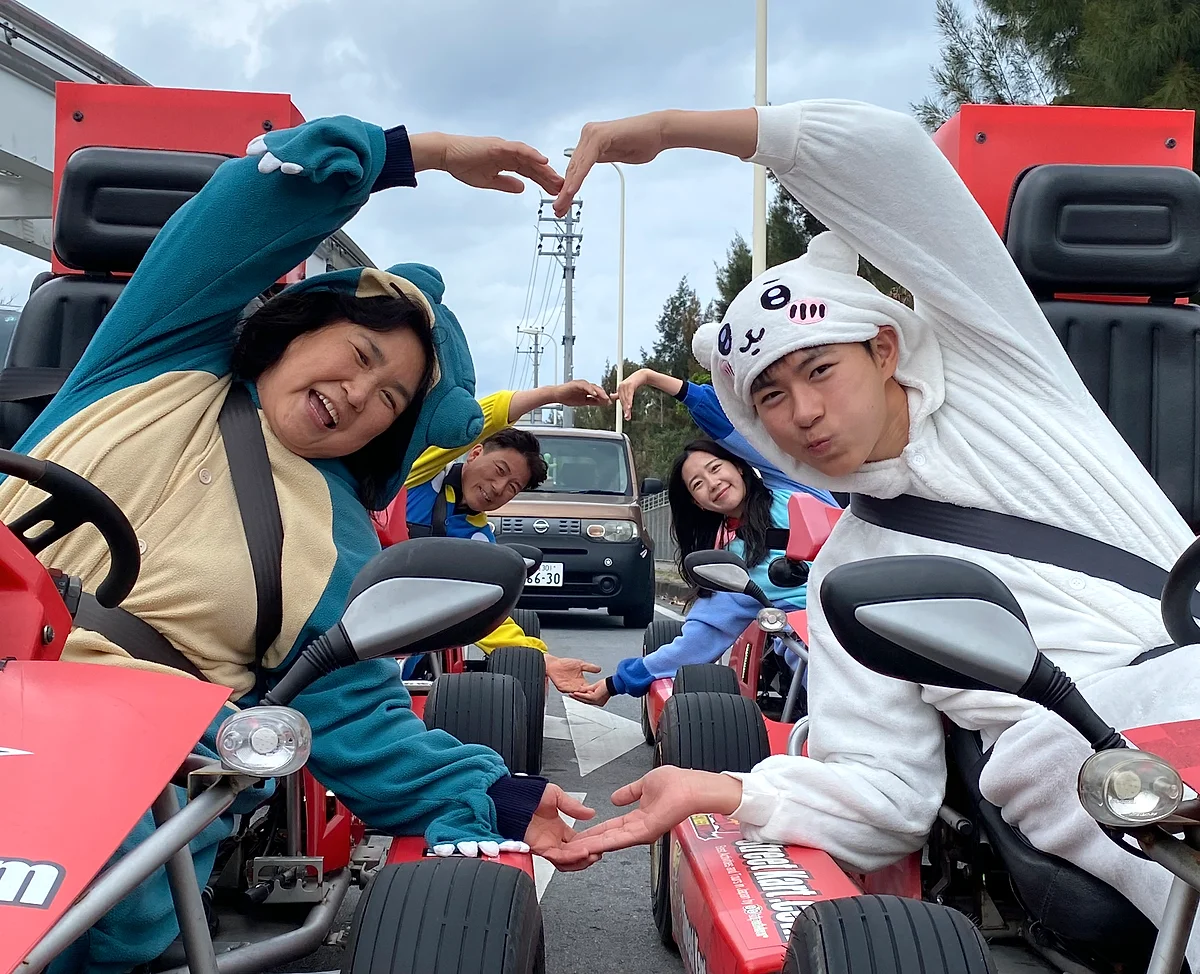
Markets and Yachimun Street Within Walking Distance of Higashimachi, Naha: How Kart Drivers and Those Who Wait Can Spend Their Time
In the aisle of a market, a father suddenly stops.
He isn't pointing at some famous sign. At the back of a stall, two of the workers are laughing and chatting. Under the white glow of the fluorescent lights, a knife pauses over a wet cutting board, then starts moving again. What the father was watching was those hands and that laughter.
When you travel around Naha, you run into moments like this again and again. On the way from one well-known sight to the next, in an alley or market you only meant to pass through, the face of someone traveling with you suddenly softens. This article follows these "in-between" scenes, using the reactions of travel companions as a guide. Can a group of mixed ages and energy levels each spend the time at their own pace? That's what we'll look at.
Why Do Travel Companions Light Up in Okinawa's "In-Between" Places?
Kokusai Street and Senagajima are places you've seen in photos many times before your trip. The moment you arrive, you start matching them up: "Ah, that's the view." That's part of the fun of travel too. But the everyday scenes of Naha come with no preview. Nobody has seen them in advance, so people's reactions show plainly on their faces.
In Brazil, I'm told, street-corner feiras (open-air markets) pop up on weekends. Stalls piled high with fruit, voices calling out prices, hands offering you samples. From what I hear, they're markets that wrap you up in their bustle. Naha's markets are a little quieter. That makes it easier to see each person's hands at work and catch the hushed conversations. In places with less noise, your eyes start doing more of the work.
The key point here is that not everyone in your group reacts to the same things. Mom looks at how the ingredients are arranged. Dad watches how the workers move. Grown-up sons and daughters notice the colors of the pottery or the lettering on the signs. Even walking down the same street, each person's eyes stop in different places. And the further a place is from the itinerary, the clearer those differences become. That's why everyone in the group comes away with "something only I found."
Everyday Naha Scenes Within Walking Distance of the Shop
Street Kart's Okinawa shop is in Higashimachi, Naha. Around the shop, within walking distance, are several places that feel closer to local daily life than to tourist attractions. None of the places introduced here are on the tour route. They're options to visit on foot before or after your experience.
At Makishi Public Market, Mom Stops in Her Tracks
About a 10-minute walk from the shop, right off Kokusai Street, is Makishi Public Market. Known as "Okinawa's kitchen," it's lined with Okinawan ingredients. The blue of fish glistening on ice, the deep green of stacked vegetables. The way things are displayed shows the personality of the people selling them.
The market has an interesting system: you can bring ingredients you've bought to the second floor and have them cooked for you.
This is where your companions' reactions clearly split. A mom who loves to cook will probably linger on the first floor. What's this fish called, and what's the best way to eat it? She might start asking the vendors through gestures. Meanwhile, a dad who's tired from walking relaxes a little when he hears there's time to sit and wait for food upstairs. A place where a group can naturally split into shoppers and waiters is a welcome thing for travelers with different energy levels.
When you don't share a language, pointing at the food, tilting your head, and smiling often gets the message across surprisingly well. In those moments, whoever gestures the most becomes the group's interpreter. Sometimes an unexpected person takes on the role, to everyone's surprise. I often picture scenes like that in the market aisles.
Yachimun Street and Tomari Iyumachi, Even at Different Walking Speeds
About a 15-minute walk from the shop is Tsuboya's Yachimun Street. "Yachimun" is the Okinawan word for pottery. It's a calm street lined with pottery shops and cafés.
The people who stop here are usually the ones particular about tableware. They pick up plates from the shelf one by one, turn them over, and put them back. The small, dry clink of ceramics touching carries to the back of the shop. Run a finger along a rim where the glaze has bled, and the light from the window wavers slightly across the plate. Anyone eager to move on can wait at one of the street's cafés. No one rushes, and no one is rushed. Anyone who has dabbled even a little in graphic design could spend a long time just on the colors of the pottery.
For those who can walk a bit farther, Tomari Iyumachi is about a 20-minute walk from the shop. It has a fish market and eateries, and the atmosphere is less tourist spot and more "where Naha locals buy their fish." Also about 20 minutes on foot are Naminoue Beach and Naminoue Shrine.
Laying out the walking distances makes it easier to figure out who in your group can go how far. The market, 10 minutes away, works for everyone. Yachimun Street, 15 minutes away, for the pottery lovers and whoever tags along. Tomari Iyumachi and Naminoue, 20 minutes away, for those with energy to spare. Split up like that, then meet up later. Not everyone has to walk the same distance. For a group with a range of stamina, I think that's the most important thing.
Those Who Drive, Those Who Wait: Splitting Up So No One Overdoes It
Street Kart's karts are single-seaters. You can't drive with someone riding beside you. Check the requirements for drivers (age, driver's license, etc.) on the official website before your trip. The required licenses and documents vary by country and license type, so sorting out in advance who in your group can drive will save you scrambling on the day.
Once you check the requirements, most groups split into two: those who take the wheel and those who wait.
There's no need to think of this as a lonely split. Quite the opposite. Parents who aren't confident in their stamina are freed from the pressure of "we all have to do the same thing." While their son or daughter is out driving a kart, the parents can enjoy a leisurely meal on the second floor of Makishi Public Market. That's the kind of time you can have. And the drivers don't have to feel guilty about dragging everyone along at their pace.
Tours are led by a guide and follow a set course for each shop. So the key is to clearly decide on a meeting place and time with those waiting before you set off. Tour length varies by course, so check it on the official website when you book.
The shop has no parking. Please use public transportation to get there. If you're traveling by rental car, just leave the car at your hotel on kart day. Deciding that in advance takes one thing off your plate on the day. Hyatt Regency Naha Okinawa is about a 5-minute walk from the shop. Before booking a place to stay, it's worth checking the distance to the shop to make getting around easier.
Think about your luggage too. The shop has lockers for small items, but they aren't suited to large luggage like suitcases. If you're bringing something on the kart, a small bag is about the limit. If your schedule has you heading over straight from the airport, it's easier to drop your large luggage at the hotel first. If you ask a waiting companion to watch your bags, they'll end up dragging a suitcase through the market aisles. Their precious "in-between" time ends up spent guarding luggage.
Naha's Everyday Life and Sea from a Kart's Low Vantage Point
From here on, this is about the people behind the wheel.
Once you set off, the wind rushes past your cheeks. Your eye level drops dramatically, and the glare off the asphalt is right there. When you stop at a light, the sounds of the city come right up to your ears. Footsteps on the sidewalk, shop shutters, a distant horn. It feels like your eyes are level with the city itself.
The karts have no suspension. Seams in the road and small bumps come straight up through the steering wheel and seat. The textures of the road you'd never notice from the back seat of a car reach your body directly. You'll go home remembering Naha's streets not only with your eyes but with your body.
According to the shop's information, the places in Naha covered on the Okinawa tours include the Prefectural Office area and Naha City Hall, in addition to Kokusai Street. The areas around the Prefectural Office and City Hall are less tourist spots than everyday places for people who work in Naha. People in suits come and go along the sidewalks, and office windows reflect the afternoon light. Driving a kart through it all gives you a strange feeling. You're supposed to be a tourist, yet you've slipped into the daily life of the city. It wouldn't be strange at all if a younger brother behind the wheel said, "Driving down a regular commuter road is actually what makes it fun."
Around Naha Airport, you can see planes taking off and landing up close. The low rumble of engines passing overhead resonates in your chest before it reaches your ears. Music lovers won't forget that deep bass.
There's also a course that passes through Senagajima. A small island south of Naha Airport, it greets you with emerald-green water and the white buildings of Senagajima Umikaji Terrace. The view is reminiscent of a Mediterranean resort. When you come out onto the seaside road, the smell of the ocean suddenly grows stronger. Sunlight bouncing off the white walls is so bright you can't help squinting.
During the tour, there are also stops at photo spots. Depending on the course, you may take a break at Senagajima and gaze at the sea with a Blue Seal ice cream in hand. Send a freshly taken photo of the ocean to the companions waiting at the market. That alone connects the time you spend apart, just a little.
Check which course passes where in the official website's information when you book.
When the drivers return to the meeting spot, the conversation usually doesn't stop. The parents who waited talk about the fish they saw at the market, and the drivers talk about the sound of the planes. At the same time, they were seeing different sides of Naha. When those two stories come together at the dinner table, the trip suddenly takes on depth.
What Makes Street Kart Appealing
Tour guidance on the day is basically in English. Guidance in Japanese or other languages depends on the staff that day and isn't guaranteed. If you're concerned about language, check the official website in advance. The website itself is available in 22 languages.
Here's a look at the track record so far. As of November 2023, across all shops combined, there had been over 150,000 tours, over 1.34 million customers, and over 20,000 reviews, with an average rating of 4.9 out of 5.0. There are 9 shops nationwide (7 in Tokyo, 1 in Osaka, 1 in Okinawa), and in Okinawa, the experience is offered at the Naha shop.
Things to Check as a Group Before You Go
Finally, here's a summary of pre-trip preparations.
First, decide who will drive. You can check the requirements on the official website. It's fine if someone doesn't meet them. A role awaits them spending time on the market's second floor or at a café.
Next, booking timing. Weekends tend to fill up, so if you want to ride on a weekend, booking early is recommended. Reservations can be made via Facebook, LINE, or email, and contact details are listed on the official website.
Then, the meeting plan. Where will those waiting spend their time, and where will you meet up? Makishi Public Market is a 10-minute walk from the shop, and Yachimun Street is a 15-minute walk. Using these two as reference points lets even those with less stamina get around comfortably.
Clothing is also something to discuss as a group. Drivers should wear closed-toe shoes. Sneakers are recommended. Sandals, heels, skirts, and dresses aren't suitable for driving, and it's safest to avoid expensive clothes you'd hate to get dirty. If you're spending the morning at the beach before joining, plan to shower, change clothes, and switch shoes before heading to the shop.
Having a backup plan for the weather gives peace of mind too. In light to moderate rain, tours go ahead as scheduled and raincoats are provided. In heavy rain or typhoons, tours are canceled, and longer courses may be shortened. In that case, you can choose to join the shortened tour and receive a refund of the difference, change to another day, or cancel for a full refund. With your waiting companions, talk through where you'll spend time and where you'll meet on a rainy day, so you won't scramble on the day.
As you pack your bags at the end of the trip, the small dish Mom picked out on Yachimun Street might turn up. When you unwrap the newspaper, the light from that shop's window seems to still linger on the rim of the glaze. On your younger brother's smartphone, a photo of the kart taken before setting off. Dad is still talking about the laughter of the people at the market.
Everyone in the group brings home something different. That's the beauty of a trip spent wandering Naha's in-between places. What will you put in the blank spaces of your itinerary? Start by opening the official website.
This article was originally written in Japanese and translated using AI. Some expressions may read unnaturally, and we appreciate your understanding. For the most accurate and up-to-date information, please refer to the official site at kart.st.
Street Kart is not affiliated with Nintendo or the Mario Kart series in any way. We do not provide costumes of Nintendo characters, and such costumes may not be worn during tours even if brought by participants.