
Street Karting in Okinawa, from Booking to Tour Day: How the Scenery Changes Through the Day, and How to Plan for a Group of Mixed Ages
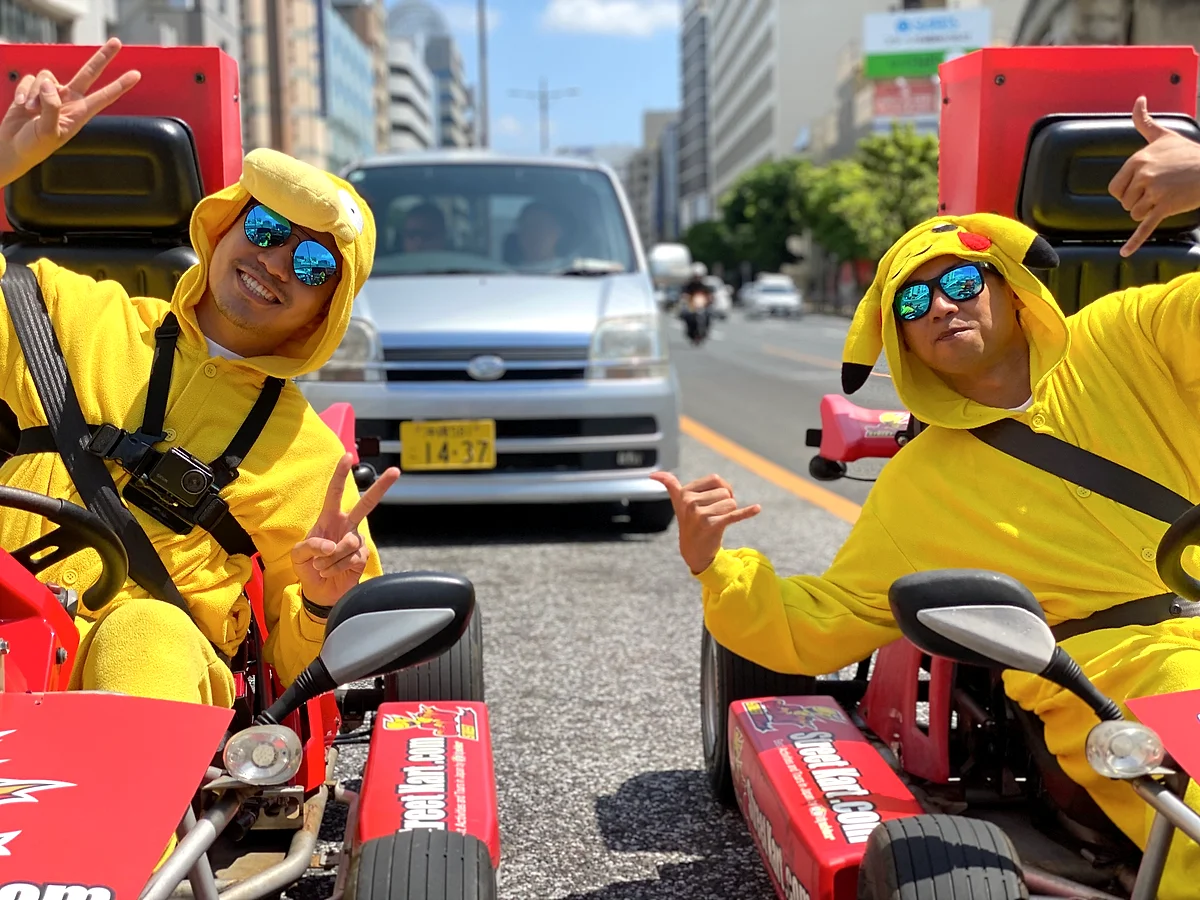
Street Karting in Okinawa, from Booking to Tour Day: How the Scenery Changes Through the Day, and How to Plan for a Group of Mixed Ages
Step out of the arrivals lobby at Naha Airport and a humid southern breeze comes in through the automatic doors. After the air-conditioning, you feel the weight of the air first, and the smell of the sea a moment later. Your group might include younger travelers who are set on driving, someone who laughs and says, "I'll just wave you off," and someone who'd like to rest at the hotel in the afternoon. When you book street karting in Okinawa, you'll probably have two questions: when to drive, and what the non-drivers will do in the meantime. This article is organized around time of day and walks through each step, from before you book to arriving at the shop on the day.
Before Booking, Decide Who in Your Group Will Drive
Start by sorting the whole group into "drivers" and "non-drivers." If this stays vague when you go to book, things tend to get complicated later.
The karts are single-seaters, so nobody can ride as a passenger. Someone who isn't comfortable driving but still wants to come along can't join that way. That's why it pays to plan what the non-drivers will do from the start. For a group of mixed ages, this is the stage that decides whether the day works for everyone.
If someone is anxious about driving and can't decide, the guides may help them make up their mind. Every tour is led by a trained guide, so even first-timers can check each turn and each stop as they go.
It helps to write the decisions as a list in your group chat. Put down each driver's name and the country that issued their license, and you can copy it straight into your booking message. Ask each non-driver to add one place they'd like to visit during the tour. That small step gets everyone on the same page for the day.
Next, check that everyone who wants to drive meets the participation requirements. This article doesn't give definitive age or license requirements. The documents you need can depend on the country that issued your license, so have each driver check the official page on driver's licenses before the trip. If you aren't sure whether your license qualifies, ask when you book so you don't end up scrambling on the day. Nobody wants to find out just before the trip that their documents won't work.
Splitting the day clearly into "time on the karts" and "time exploring the city on foot" makes the whole plan easier to follow.
How Okinawa's Scenery Changes: Daytime, Evening, and Night
In an open-top kart, your eyes are much closer to the ground than when you're walking. Nothing blocks the wind on your face, and the sounds of the city and the fine vibration of the engine reach you all at once. That feeling is the same whenever you drive. Still, on the same Naha route, what you see changes completely with the time of day.
Departure slots and tour length vary by shop and season. This section only covers how things look at different times of day. Check the slots actually available when you book. Routes also vary by tour, so confirm the route at the same time.
Midday Light Makes the Sea's Colors Vivid
The scenery listed along the Okinawa shop's routes includes Senaga Island, the area around Naha Airport, central Naha with the Prefectural Office and Kokusai-dori, and the coastal roads. When the sun is high, the colors of the sea come through at full strength. The emerald green of the shallows shades gradually into deeper blue farther out. There's no line between them, and however closely you look, you can't say where the blue begins. Next to the water, the white buildings of Senaga Island's Umikaji Terrace catch the strong light and make the sea look even deeper.
Around Naha Airport, you can watch planes taking off and landing up close. Looking up from a kart, the bellies of the planes are much bigger than you'd expect, and the roar of the engines blends with the hum of the kart. In the bright midday light, white planes stand out clearly as they cross between the blue of the sky and the blue of the sea.
On the other hand, the midday sun in Okinawa is strong. Depending on the season, you may be in direct sun for the whole drive. If older members of the group are driving, don't pack too much in before or after. Rather than heading over exhausted after a morning at the beach, have a slow breakfast and go to the shop with energy to spare, so you can actually enjoy the scenery. If you're coming from the beach, think about your footwear. Open-toed sandals should be avoided, and changing into closed-toe shoes such as sneakers is recommended.
In the Evening, the Sky over Senaga Island Steals the Show
Senaga Island lists its sunsets among its highlights. As the sun starts to drop, orange melts into the blue of the sea, a pale pink spreads over it, and the whole sky slowly shifts color. Light that bounced off everything in bright white at midday comes in lower and skims across the water at an angle. The glare fades, and only soft-edged light is left. At the same time, the lights of planes on approach to Naha Airport appear one by one in the darkening sky.
Sunset times vary a lot by season, though, so there's no guarantee that booking a particular time means driving into the sunset. A realistic approach is to look up the sunset time for your travel dates and compare it with the open slots. If you can't get an evening slot, you can still head out to Senaga Island after the tour to watch the sunset.
At Night, Naha's City Lights Set the Rhythm
After dark, the focus shifts from the sea to the city. The area around the Prefectural Office and Kokusai-dori in central Naha is the heart of Okinawa tourism, with an unbroken line of shop signs and streetlights. From down low, the lights don't come one at a time. They approach at regular intervals and slide past behind you. If you love music, the spacing may feel like a beat. The street that's lined with colorful souvenir shops by day becomes a single ribbon of light streaming past at night.
If you're driving at night, keep that day's plans light. Bringing a jacket suited to the season is also recommended, so put one in your bag for a night drive.
Book via Facebook, LINE, or Email: What to Prepare Before You Send
You can book through Facebook, LINE, or email. Contact details for each are on the official website, which is available in 22 languages.
Before you get in touch, agree as a group on the number of drivers, your preferred date and time slot, and a second choice. Include the country that issued each driver's license, and mention that you want the Okinawa shop. Weekends fill up quickly, so contact them early. Even if the rest of your itinerary isn't settled yet, fixing the street kart day first and planning the other sightseeing around it gives your plan a stable anchor.
If budget is a concern, note that prices vary by season and time slot, so check the latest prices on the official website (kart.st). It's safer to check again just before you book than to plan around information you saw months ago.
Guidance on tour day is generally in English. Whether guidance is available in Japanese or other languages depends on the staff that day and isn't guaranteed. If language is a concern, raise it when you book.
Getting to the Shop on the Day: Plan Not to Drive There
Many people picture an Okinawa trip as driving all over the island in a rental car. Street kart day is the exception. The shop has no parking, and you're encouraged to use public transportation. Plan to leave the rental car at your hotel and take public transport to the shop.
The shop is in central Naha. It's a bit of a walk from the nearest Yui Rail station, so check on a map the day before how you'll get there from the station and where you'll transfer. If older members are with you, leave early enough to have a breather once you arrive.
If you're driving on the day you land in Okinawa, think about where to put your luggage. The shop has lockers for small items, but they aren't meant for large luggage like suitcases. Dropping your bags at the hotel before heading to the shop lets you travel light.
Convenience stores including 7-Eleven, FamilyMart, and Lawson are within a 5-minute walk of the shop, and the shop has restrooms. Buy a cold drink before the drive and take a moment to feel the chill in your hand before you go in. Even a short pause like that helps settle your nerves. As for weather, tours go ahead as planned in light to moderate rain, and raincoats are provided free of charge. In heavy rain or a typhoon, the tour is canceled, and you'll have options such as rescheduling. If you're traveling during typhoon season, leave room in your itinerary to move to another day.
How Non-Drivers Can Spend Their Time in Naha
While the drivers are out on the tour, the non-drivers get time of their own. If you treat it as a second sightseeing outing rather than waiting around, everyone gets to enjoy the day in their own way. Settle on a meeting place and time before the drivers leave.
One nearby option is Kokusai-dori, about a 10-minute walk from the shop. This street is lined with souvenir shops and restaurants for about 1.6 km and is sometimes called the "Miracle Mile." You can stroll at your own pace, stopping in at Okashigoten, known for its purple sweet potato tarts, or at shops selling Okinawan crafts and goods. Makishi Public Market, also about 10 minutes away on foot, lets you buy Okinawan ingredients at the market and have them cooked for you upstairs, which makes a good light lunch.
If walking is hard for someone in the group, booking a room near the Hyatt Regency Naha Okinawa, about 5 minutes on foot from the shop, lets them take breaks as they go. If they can walk a bit more, Yachimun-dori is about 15 minutes away. It's lined with pottery shops and cafes selling Okinawan ceramics, and the glaze on the pieces set out in front of the shops catches the light from different angles. Just walking slowly down the street gives you a real feel for the place.
For anyone who wants to see the sea, Naminoue Beach is about a 20-minute walk from the shop, with Naminoue Shrine right next to it. Sitting on the sand and listening to the waves until the drivers come back is another nice way to spend the time.
What the non-drivers do can also depend on the time of day. During a daytime tour, they could have lunch at Makishi Public Market and then shop on Kokusai-dori. In the evening, they could stroll Kokusai-dori with an ice cream while they wait. There's a Blue Seal shop on Kokusai-dori, so you can walk with a cone in hand. At night, those who want to rest can head back to the hotel first, while those who want to meet up can join the drivers on Kokusai-dori. With a destination planned for each time slot, nobody feels like they're stuck waiting.
The drivers will probably come back with the wind still on their cheeks, talking a little louder than usual. Meet up on Kokusai-dori and trade stories over Okinawa soba: "The sea was such an amazing color," "The city lights just streamed past." That way the non-drivers get to see the scenery through their words. These may well be the moments that stay with you longest.
When a group spans different ages and energy levels, not everyone has to do the same thing. The drivers grip the wheel and feel the weight of the southern breeze on their faces. The non-drivers walk through Naha, noticing the glint of pottery and the smells of the market. Then at night, around the same table, everyone shares what they saw.
This article was originally written in Japanese and translated using AI. Some expressions may read unnaturally, and we appreciate your understanding. For the most accurate and up-to-date information, please refer to the official site at kart.st.
Street Kart is not affiliated with Nintendo or the Mario Kart series in any way. We do not provide costumes of Nintendo characters, and such costumes may not be worn during tours even if brought by participants.